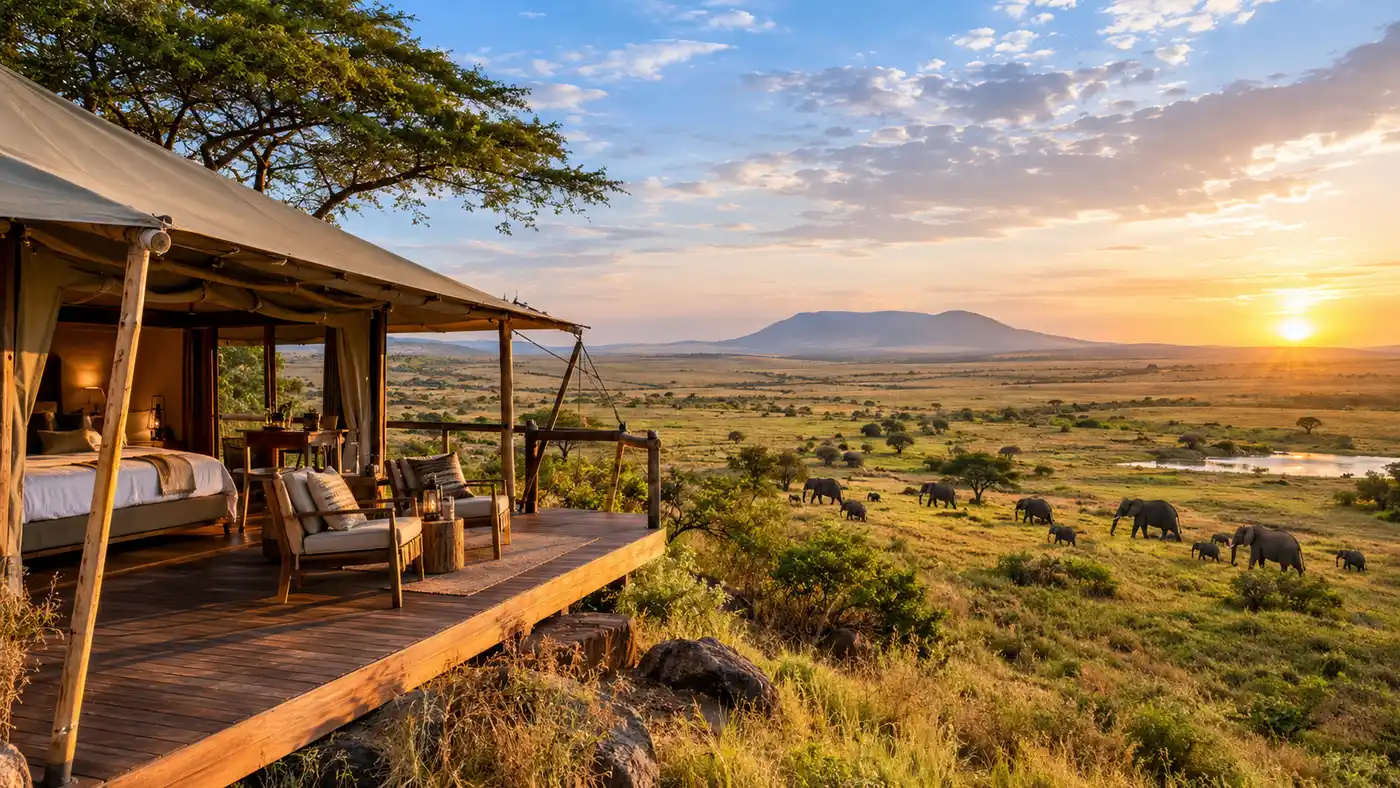
Where to Stay in Serengeti: Lodges and Tented Camps
The first night I spent in the bush, an elephant scraped its flank against the canvas wall of my tent around 3:15 in the morning. The nylon zipper rattled, dry acacia twigs snapped underfoot, and I lay rigid on top of the sheets with my eyes wide open. Picking the right lodges in serengeti national park is not like booking a hotel room in London or Nairobi. You are choosing your level of isolation, how much comfort you need after nine hours bouncing over corrugated dirt tracks, and how thick the barrier should be between your pillow and a roaming pride of lions.
The park is vast, spanning roughly 14,763 square kilometers of open savannah, riverine forest, and rocky granite outcrops. Because distances are deceptive and roads are slow, where you choose to sleep dictates what you actually see at dawn. A bad choice means wasting four hours every day commuting through dusty tracks instead of watching leopards haul kills into sausage trees. Between permanent stone retreats, seasonal migration outfits, and rustic public pitches, your options cover every comfort level and budget.
Book your serengeti safari tours experience:
Choosing Between a Serengeti Safari Lodge and a Tented Camp
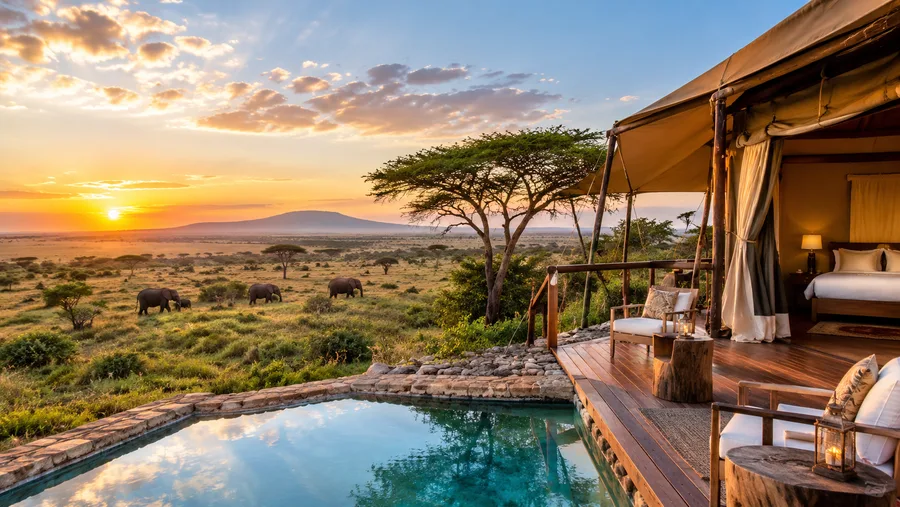
People often get confused by the terminology. A traditional serengeti safari lodge is a permanent brick, stone, or timber building. These properties tend to look like boutique resorts, offering glass windows, air conditioning, swimming pools, deep bathtubs, and paved pathways linking the dining room to your bedroom. If you stay at a larger serengeti lodge tanzania offers, you get predictable amenities, reliable power outlets for camera batteries, and solid walls that keep the nighttime noises somewhat muted. For travelers with toddlers, travelers with mobility concerns, or anyone nervous about sleeping near predators, a solid hotel serengeti tanzania setup feels reassuring.
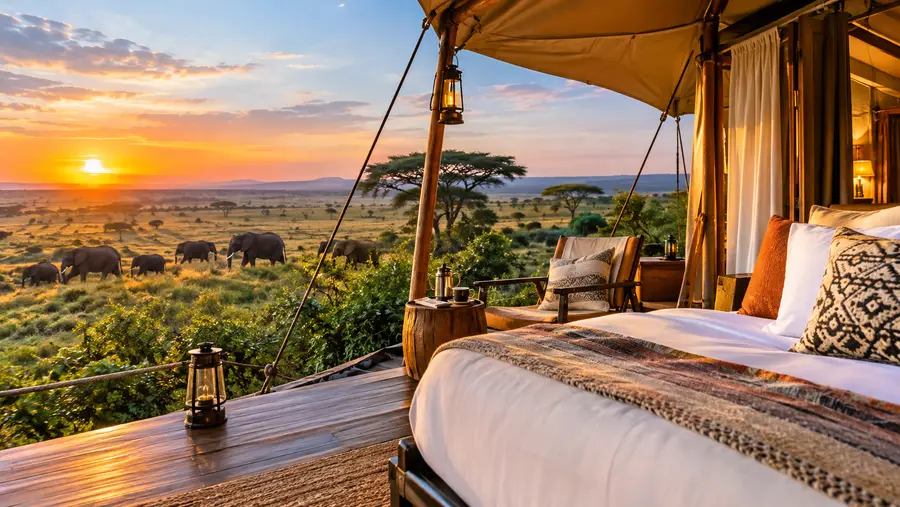
A tented serengeti camp is something else entirely. Do not picture a cramped dome tent you pitch on a hiking trip. These are massive walk-in canvas suites mounted on raised wooden decks or concrete slabs. Inside, you find king-sized beds with hardwood frames, Persian-style rugs, flush toilets, and hot showers piped through copper fixtures. The magic of a serengeti safari camp tanzania experience is sonic. You hear the deep sawing cough of a leopard at night, the eerie giggles of spotted hyenas, and the early dawn chorus of ring-necked doves right outside your screen windows.
Note: Canvas walls offer absolute privacy from human eyes, but zero acoustic insulation. If you are a light sleeper, pack soft silicone earplugs; the nocturnal bush is noisy, and zebra herds graze loudly outside the tent skirts.
Mobile tented camps take the canvas concept one step further. Rather than anchoring to one spot, these semi-permanent setups pack up lock, stock, and barrel two or three times every twelve months. They shadow the wildebeest herds across the ecosystem, moving between the southern calving grounds and the northern river crossings. While you trade away swimming pools and paved walkways, you gain front-row access to the greatest wildlife spectacle on earth.
Picking the Right Region for Your Serengeti Lodge Safari
Location is everything. The park is divided into distinct zones, each with unique terrain, animal densities, and weather patterns. If you pick an incredible serengeti safari lodge in the far south during August, you will spend your days looking at empty scrubland while millions of gnus are dodging crocodiles two hundred kilometers north. Understanding Serengeti regional geography keeps you close to the action without unnecessary travel fatigue.
Central Seronera is the beating heart of the park. It holds water year-round, which means resident cats, elephants, and giraffes stick around regardless of where the migration happens to be. It is also where you find the highest concentration of tanzania safari lodges serengeti has built over the decades. You will see plenty of other safari vehicles here, especially around big cat sightings, but Seronera is the safest bet for first-time visitors who want consistent wildlife viewings throughout the year.
- Central Seronera: reliable big cat sightings all year, high lodge density, close to the central airstrip, but prone to vehicle congestion during peak seasons.
- Northern Serengeti: dramatic Mara River crossings from July through October, sweeping hilly landscapes, expensive fly-in camps, and wilder scenery.
- Southern Plains and Ndutu: flat volcanic grasslands, calving season between January and March, incredible cheetah action, very dry and empty outside the rainy season.
- Western Corridor: dense riverine forest flanking the Grumeti River, giant Nile crocodiles, colobus monkeys, best visited in May and June as herds move west.
The Western Corridor offers a quieter alternative. Lodges perched along the Grumeti River or nearby hills capture the migration as it funnels toward Lake Victoria. Out here, camps feel isolated and peaceful, far removed from the busy minibuses of central Seronera.
Comparing Luxury Serengeti Lodges, Mid-Range Camps, and Camping Safaris
Pricing across the park swings wildly. At the highest tier, luxury serengeti lodges charge anywhere from $1,200 to $3,500 per person per night, including private guides, bush banquets, vintage cellars, and scenic helicopter transfers. Properties like the Four Seasons Safari Lodge or Singita Grumeti operate like five-star desert resorts, complete with glass-walled fitness studios, spa pavilions, and infinity pools overlooking waterholes where buffalo herds drink all afternoon. If you prefer high-end exclusivity, reviewing dedicated luxury Serengeti safaris and private tours helps narrow down which remote concessions offer private off-roading permits.
Mid-range serengeti national park lodges and permanent tented operations sit between $380 and $750 per person per night. Places like Serengeti Serena Safari Lodge or a standard serengeti wildlife camp strike a great balance between comfort and value. You get hearty buffet meals, hot water whenever you turn the knob, clean linens, and knowledgeable local staff who know every corner of the reserve. For most people, this tier delivers everything you genuinely need for an unforgettable holiday.
| Accommodation Style | Approx. Cost (per person/night) | Power and Hot Water | Best Suited For |
|---|---|---|---|
| Public Camping Safari | $80 - $160 | Cold communal showers, solar torches | Budget adventurers, backpackers, wild campers |
| Mid-Range Tented Camp | $380 - $650 | 24/7 solar power, bucket or solar showers | Couples, photographers, authentic bush lovers |
| Permanent Safari Lodge | $500 - $1,100 | Full grid/generator power, deep bathtubs | Families, first-timers, multi-generational groups |
| Ultra-Luxury Bush Villa | $1,400 - $3,200+ | Full luxury utilities, plunge pools, air-con | Honeymooners, high-end private travelers |
At the lowest end of the cost spectrum is the traditional serengeti camping safari. You sleep in small nylon two-man tents set up in unfenced public grounds like Seronera Campsite. You cook meals over open fires with a camp chef, use simple communal bathroom blocks, and sit around a single lantern sharing safari stories. It is dusty, raw, and thrilling. Hearing a lion roar while lying on a thin foam mattress three inches off the dirt floor is something a fancy resort simply cannot reproduce.
Book your serengeti safari tours experience:
Mobile Tented Camps and Following the Great Migration
If witnessing the herds is your singular travel dream, anchor yourself to the moving animals. The Serengeti migration camp concept was born out of sheer geography; because the herds walk around 800 kilometers each season, static hotels often sit empty of wildlife for months at a time. Checking our detailed Serengeti Great Migration safari guide will clarify herd positions month by month so you book the correct sector.
In the north, operations like Safari Haven Migration Camp Tanzania or seasonal setups near Kogatende pop up just in time for the dramatic river crossings. These camps run on clean solar power, store water carefully, and leave no trace behind when they pack up at the end of October. Staff hoist canvas walls, haul bucket showers filled with hot water boiled over open acacia coals, and serve three-course candlelit dinners under the southern constellations.
Pro tip: When booking a seasonal camp for river crossings, ask whether the camp sits north or south of the Mara River; crossing the river during daily game drives can waste hours waiting at crowded bridge points.
There is an understated romance to these temporary camps. In the evening, everyone gathers around the "bush television" - the central campfire - with a cold Tusker beer or gin and tonic in hand. You talk with guides about the leopard spotted sleeping on a sausage tree branch at 4:00 PM, while the smells of woodsmoke and damp red clay fill the air.
Then you walk back to your canvas room escorted by an armed Maasai guard carrying a flashlight and traditional spear. You unzip the doorway, slip under thick wool duvets, and listen to the wind rustling the whistling thorn trees outside.
Practical Realities: Amenities, Power, and Camp Etiquette
Staying out in the bush requires adjusting your expectations about everyday conveniences. Even a luxurious serengeti safari lodge tanzania relies heavily on solar arrays, backup diesel generators, and trucked-in water supplies. Outlets inside safari tents might only run on 12-volt solar loops, meaning high-draw appliances like travel hairdryers or electric kettles will trip the camp breaker instantly. Most outfits provide a communal charging station in the mess tent where camera batteries and laptops can charge safely during daylight hours.
Water is gold in the Serengeti. In many seasonal camps, bucket showers remain the standard method for washing off road dust. You notify your tent attendant roughly twenty minutes before you want to clean up. They boil twenty liters of water over a wood fire, pour it into an exterior canvas bladder hoisted above your bathroom annex, and you control the flow with a simple pull-valve inside. It is surprisingly luxurious, wonderfully efficient, and wastes zero water.
- Unfenced perimeters: wild animals walk through camps at all hours; never wander alone after dark, always wait for your security escort.
- Tent zip hygiene: keep your tent fully zipped at all times, even if stepping away for 30 seconds, because mischievous vervet monkeys know how to search bags for snacks.
- Shoe shake habit: tap your boots upside down every morning before sliding your feet inside to shake out stray spiders, scorpions, or beetles.
- Tipping funds: keep crisp, small denomination US dollar bills or Tanzanian shillings handy for the communal camp tip box, usually distributed among kitchen, maintenance, and spotter staff.
Laundry is another bush quirk worth noting. Most lodges and camps offer daily wash services included in the tariff or for a modest fee, but cultural traditions mean staff will not wash private underwear. Most places supply a small container of gentle washing powder in the bathroom so guests can handle personal undergarments themselves.
Frequently Asked Questions about lodges in serengeti national park
Are tented camps safe from wild predators at night?
Yes, tented camps are safe provided you follow camp regulations. Predators view tents as solid, uninteresting obstacles rather than food containers, so they walk around them. The ironclad rule is never to leave your tent unescorted after the sun sets, as lions, buffalos, and hyenas regularly stroll between guest pathways after dusk.
How far in advance should I book Serengeti accommodation?
For high-season dates between July and September or during the February calving season, book your lodge or tented camp nine to twelve months ahead. Prime river-crossing camps in northern Kogatende have very few beds and fill rapidly with photographers and specialized tour operators.
Do lodges and camps in the Serengeti have Wi-Fi?
Most permanent safari lodges provide dependable Wi-Fi inside guest rooms and common lounges. Bush camps and mobile tented setups usually restrict internet access to the dining tent or lounge area via satellite connections, which can be spotty during cloud cover or afternoon thunderstorms.
Quick Reference
- Peak river crossing season runs July through October in the north.
- Permanent lodges offer stone walls, pools, and 24/7 grid power.
- Mobile tented camps follow the herds for close migration access.
- Never walk outside camps after dusk without an armed escort.
Book your serengeti safari tours experience:
My Take
If you can swing it, split your itinerary between two contrasting styles of accommodation. Spend two nights in a solid stone lodge where you can soak off the Serengeti dust in an infinity pool and recharge every camera battery you own, then head deep into the bush for three nights inside a mobile tented camp. Falling asleep to the low hum of the plains and waking up to hot coffee delivered to your tent veranda before sunrise is the beating heart of East Africa. Just leave the hair straightener at home, bring warm layers for the chilly mornings, and keep your tent zipped up tight.
Read more about serengeti safari tours.